
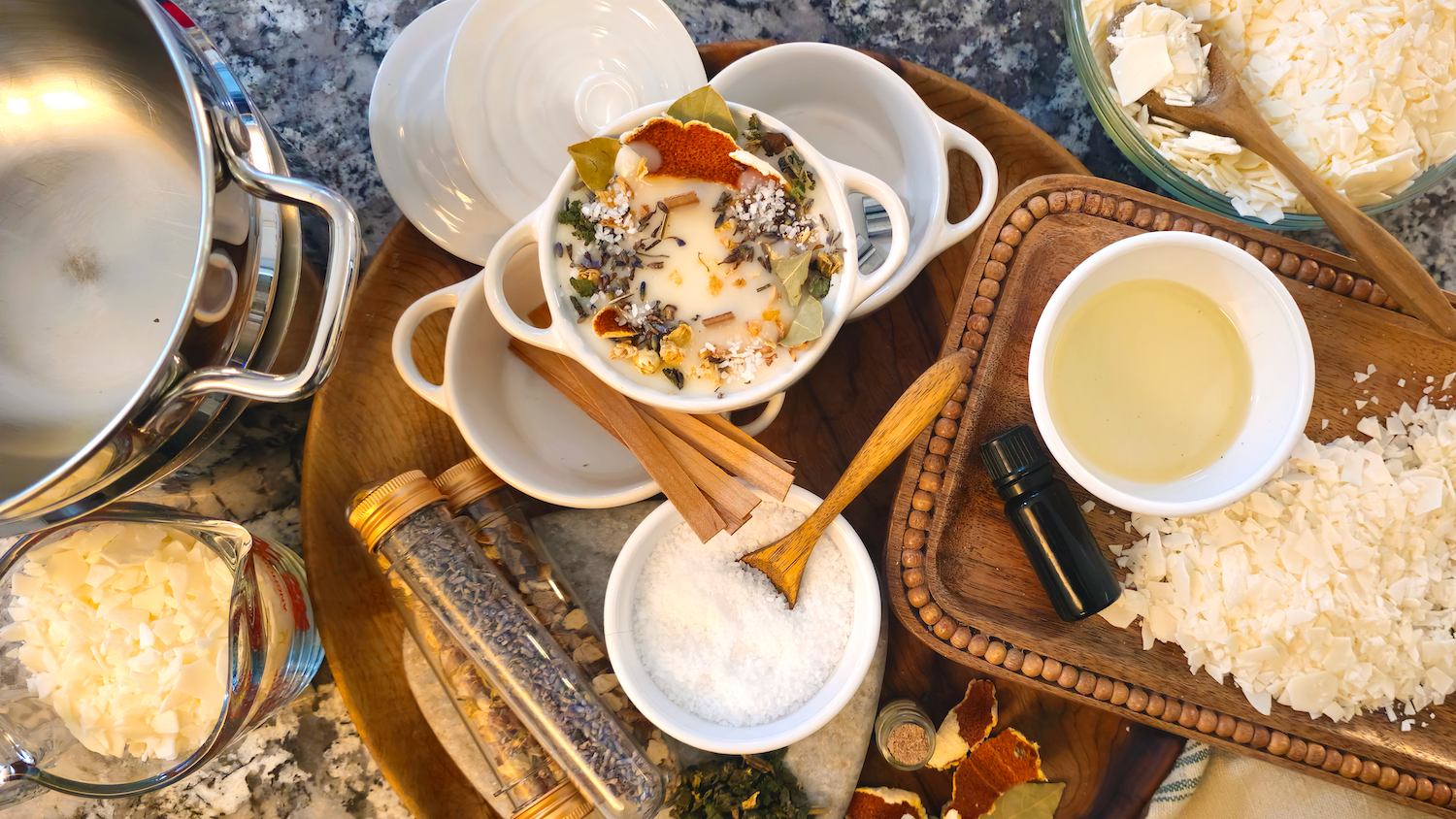
There’s something deeply grounding and intentional about making your own candles. The slow warming of wax, the gentle scent drifting through the room, the quiet patience as each candle cools and sets. The process itself is as satisfying as the glow it creates.
Homemade soy candles are the perfect place to begin. Simple, natural, and endlessly customizable, they are just as easy to make for quiet, relaxing moments as they are for practical, everyday use. From beautifully soothing scents that accent your home to more utilitarian blends that repel bugs or freshen the air, handmade soy candles are thoughtful, useful, and personal.
This beginner-friendly recipe uses just one pound of soy wax, making it ideal for small batches, heartfelt gifts, or filling your own home with something crafted slowly and intentionally. As a bonus, making candles yourself can be far more cost-effective than buying high-quality candles, especially when you reuse jars and customize each candle exactly to your needs.
Homemade Soy Candles
Makes approximately two 8-ounce jarred candles
Ingredients:
For the candles
- 1 lb. soy wax flakes
- 1 oz. essential oil (single scent or a blend you love)
- Optional: candle dye (liquid or dye chips)
- Optional: dried flowers or herbs (for decoration only)
Supplies
- Candle wicks with metal tabs
- Thermometer
- Wooden spoon or silicone spatula
- Pencils, chopsticks, or straws (for centering wicks)
- Optional: heat gun
Assembly:
Prepare your jars. Before melting anything, set up your jars. Secure each wick to the center of the jar using a wick sticker or a small dot of hot glue. Lay a pencil or straw across the top of the jar and gently wrap the wick around it to keep it upright and centered.
Melt the wax. Add the soy wax flakes to the top of a double boiler and heat slowly. Stir occasionally as the wax melts.
Bring the wax to 185°F (85°C). At this point, the wax should be fully melted, clear, and ready for fragrance and color.
Add color (optional). If you’d like to tint your candles, now is the time. Add liquid candle dye or candle dye chips once the wax is at ~185°F, stirring until evenly blended.
Note: The candle’s color often appears much lighter once it has cooled. To get a better idea of the final color, you can dip a strip of white paper towel into your candle, letting it cool to gauge the color more accurately.
Add fragrance. Remove the wax from the heat and allow it to cool gradually on its own.
When the temperature reaches 135–145°F (57–63°C), stir in 1 oz. of essential oil. Mix slowly and gently for about 1–2 minutes so the scent fully binds with the wax.
Pour the candles. Allow the wax to cool a bit more. When it reaches 125–135°F (52–57°C), carefully pour into your prepared jars, leaving about half an inch of space at the top.
Keep the jars still and the wicks centered as the wax begins to set.
Let them rest. Let the candles cool undisturbed at room temperature. They’ll be solid within a few hours, but for the best results, allow them to cure for 24–48 hours before trimming the wick and lighting.
Extra Tips & Notes
Warm your jars first: Slightly warming glass jars helps prevent wet spots where wax pulls away from the glass.
Choose the right wick: Cotton or cotton-wood wicks work best for soy wax. (Check out CandleScience!)
Centering the wick: Pencils, chopsticks, or straws laid across the jar make this easy and keep everything neat.
Dried flowers & herbs: If using botanicals, press them gently into the wax near the sides, never loose or directly around the flame.
Smooth the tops: If your homemade soy candles cool with bumps or cracks, a quick pass with a heat gun will melt and smooth the surface beautifully.
Trim the wick: Once the candle has fully set, trim the wick to about ¼ inch before lighting.
Submitted by Cayenne (Columbus, Ohio)
Why We Love It
At The Grow, we love projects that invite intention and leave room for creativity. Candlemaking is a lovely example of how simple natural materials, handled with care and patience, can become something both useful and meaningful, filling your home with warmth, light, and more than a touch of coziness.
Want Your Recipe Featured?
The Grow Community Cookbook: Sharing Homegrown Goodness is a community-sourced cookbook celebrating local ingredients and the people who bring them to life. Whether you’ve got a go-to family recipe or a creative DIY using backyard herbs, we want to see it. Check out the submission guidelines, or explore a few recipe tips, and let us know what’s growing at your table.